
Japan
doda
Japanese job board with public vacancies across industries, occupations, and regions for professionals changing jobs.
- Coverage
- Japan
- Focus
- General Job Boards
- Work setting
- Varies by listing
doda began as a 1989 career-change magazine
doda started on paper. The career-change magazine DODA was launched in 1989, the same year the staffing company Intelligence was founded. After Intelligence merged with Gakusei Engokai in 2006, DODA became a combined service mixing job ads and recruitment agency work, and the brand was refreshed in 2010. Today the site is run by PERSOL CAREER, formerly Intelligence, part of the PERSOL group.
doda is in Japanese and lists careers in Japan for people changing jobs, with public listings plus non-public roles that only agents can share.
How doda sorts its listings
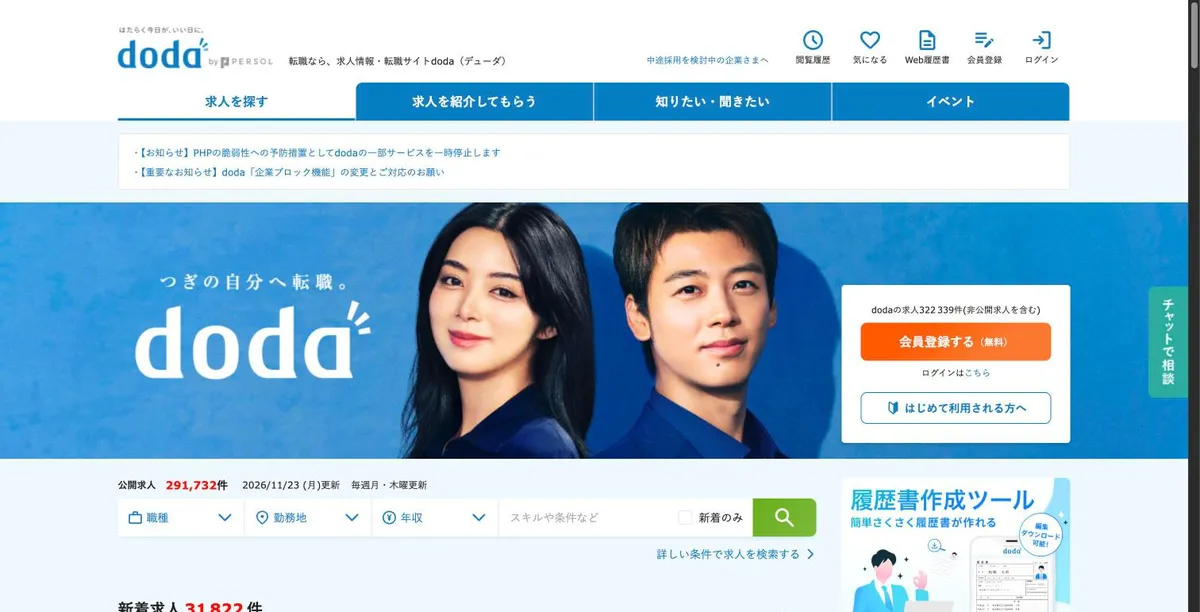
The quick search uses occupation, work location and annual income, with a "new only" box. A detailed search adds more conditions, and themed collections group jobs by feature. New listings are added every Monday and Thursday. Each ad spells out details Japanese candidates look for: annual salary range, monthly base pay, raises, bonus frequency, overtime pay, workplace smoking measures and the scope of possible transfers. Occupation pages are also published by PERSOL CAREER as a job type guide.
The candidates and companies on doda
Candidates are Japanese-speaking professionals at all career stages, in office, sales, technical and factory roles alike. A separate high-class segment targets managers and specialists earning 6 million yen or more. Employers include major Japanese groups such as Mitsubishi Logistics as well as mid-size and regional firms across the country.
How employers pay for doda
doda sells three recruiting models, all quoted on request rather than listed. As of November 2026:
- Recruitment agency service: no upfront cost, with a fee only when a hire is made.
- Job ad service: a fee when the ad is published on doda.
- doda Direct: employers search the candidate database themselves, with plans that avoid upfront fees or success fees.
The doda page for employers offers a free quote and also warns companies about sellers who promise free job ads and invoice later. Job seekers pay nothing, including for the agent service.
Why career changers sign up to doda
One account opens three routes. Candidates can apply to listings themselves, receive offers through the scout service, or work with a doda career adviser who shares non-public jobs, reviews documents and prepares interviews. A partner agent service extends that to outside agencies. The web résumé, a list of saved jobs and a company block feature (to hide a profile from the current employer) help those job hunting discreetly. "Data de miru tenshoku" reports on salaries and hiring trends help candidates judge what their profile is worth.
Reasons companies recruit through doda
Employers can mix models. A company can post an ad for volume roles, use the agency for hard-to-fill engineering jobs, and search the database through doda Direct for specialists. The success-fee model limits risk for firms unsure about demand. doda also runs career fairs and seminars where employers meet candidates directly.
doda tools and events
The mix of job board, recruitment agency and scout database under one login is doda's main difference. Career fairs, recorded seminar videos, a Q&A section on job changes and salary data complete the set.
Weighing up doda
doda is one of Japan's main career-change platforms, and its blend of ads, agents and scouting suits both active and passive candidates. Listings are detailed and refreshed twice a week. Limits: the site is Japanese only, the agency side means many emails and calls, and employers get no public prices. We recommend it to Japanese-speaking professionals planning a move and to employers who want several hiring routes from one provider. Explore more options in our Asian job boards.